
How to Choose a Padel Partner: A Team Chemistry Guide
Guides
A strong pair shares more than points; it shares decisions, space, and responsibility.
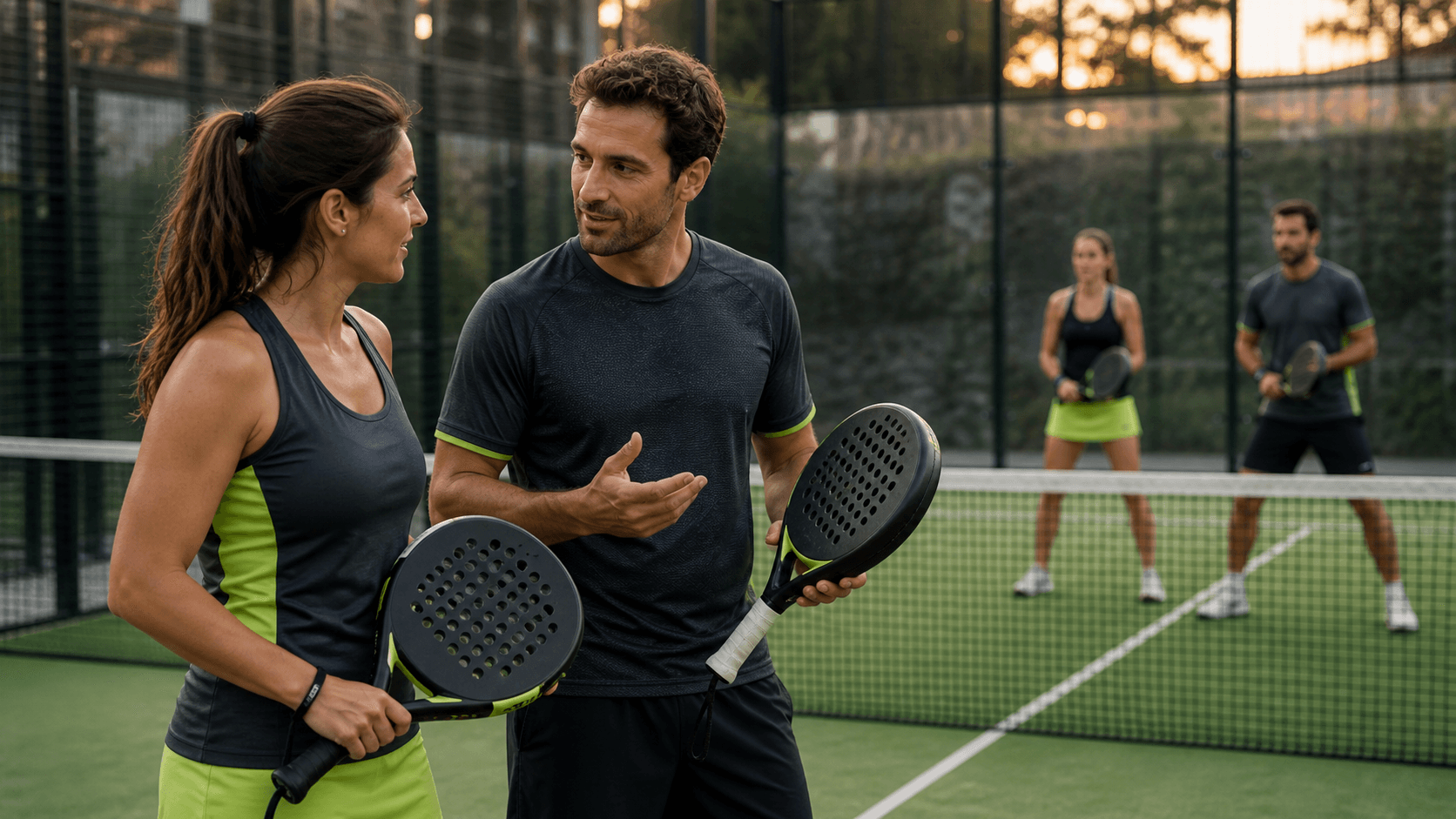
How do you choose the right padel partner?
The right padel partner is not simply someone with the same rating. Shared goals, compatible schedules, clear communication, complementary strengths, and a constructive response to mistakes create a more sustainable team. Play at least three matches against different opponents before deciding.
Key takeaways
- Discuss playing goals and match frequency first.
- Look for compatible pace and expectations, not identical ratings.
- Evaluate court-side preferences and complementary strengths.
- Pay close attention to communication after mistakes.
- Play at least three matches before deciding.
A strong padel partnership is not simply two skilled players standing on the same side of the net. Shared goals, clear communication, reliability, and complementary habits often matter more than individual ability. When choosing a regular partner, look beyond playing level and pay attention to how you make decisions together and respond to mistakes.
Why does partner chemistry matter?
In padel, two players share court space, responsibilities, and the emotional pressure of every point. A connected pair moves forward together, recovers together, and knows who should take the ball through the middle. Without that connection, even excellent shots cannot consistently cover gaps and hesitation.
The right partner does not always play exactly like you. A calm defender may combine well with an aggressive attacker, while a reliable lobber may create opportunities for a partner who is comfortable at the net.
Six qualities to consider in a padel partner
1. Do your goals match?
Expectations can quickly clash if one player wants a relaxed social match each week while the other is training for competition. Discuss how often you want to play, whether you plan to practise, and how competitive you want matches to feel.
2. Are your level and preferred pace compatible?
You do not need to have identical ratings. What matters is that both players can contribute to rallies, challenge each other constructively, and enjoy the pace of the match. A very large gap can reduce motivation for both players.
3. Do your court sides and strengths complement each other?
Share any preference for the right or left side, but also discuss the situations in which you feel comfortable: lobs, defence, net play, middle balls, or attacking. Complementary strengths give the pair more ways to solve points.
4. How do you communicate under pressure?
Good partners prepare for the next point instead of assigning blame after a mistake. They make short, clear calls, save tactical criticism for an appropriate moment, and avoid damaging each other’s confidence.
5. Are your schedules and reliability compatible?
Off-court compatibility matters for a regular team. Similar availability, timely responses to booking plans, and making last-minute cancellations the exception help the partnership remain sustainable.
6. Can you make decisions together?
One player should not dictate every tactical choice. A healthy team uses observations from both partners when deciding where to serve, when to lob, or when to move forward, and updates the plan together during the match.
What should you assess in your first three matches?
- Before the match, discuss your goal, preferred court sides, and the calls you will use for balls through the middle.
- During the match, notice the distance between you, whether you approach the net together, and how you communicate after mistakes.
- After the match, take five minutes to share one thing that worked and one specific point to improve next time.
Signs of a healthy partnership
- You can prepare confidently for the next ball after making a mistake.
- Both players make clear calls for middle balls and lobs.
- When one player struggles, the other can calm the pace of the game.
- The match plan reflects input from both players.
- Booking and scheduling communication is reliable.
Warning signs to notice
- Criticism or negative body language follows every mistake.
- One player makes every tactical decision alone.
- There is constant silence or avoidance of responsibility on middle balls.
- Your goals for fun, improvement, and competition are completely different.
- Cancellations are frequent and often happen at the last minute.
How can you build better team chemistry?
Chemistry improves faster when you repeat specific situations together instead of only playing full matches. Practise the serve and first ball, return and lob, calls through the middle, and the transition from defence to the net.
Choose one shared objective for each match, such as “we will recover together after every lob” or “we will call middle balls early.” Small, measurable goals create clearer progress than simply trying to play better.
When your partner is ready, book your court with BiKort
Once you decide to play together, the next step is creating regular court time. Use BiKort to discover nearby padel venues and available slots, then complete a booking that works for both schedules in one flow.